
B R O O K L Y N
A Love Letter

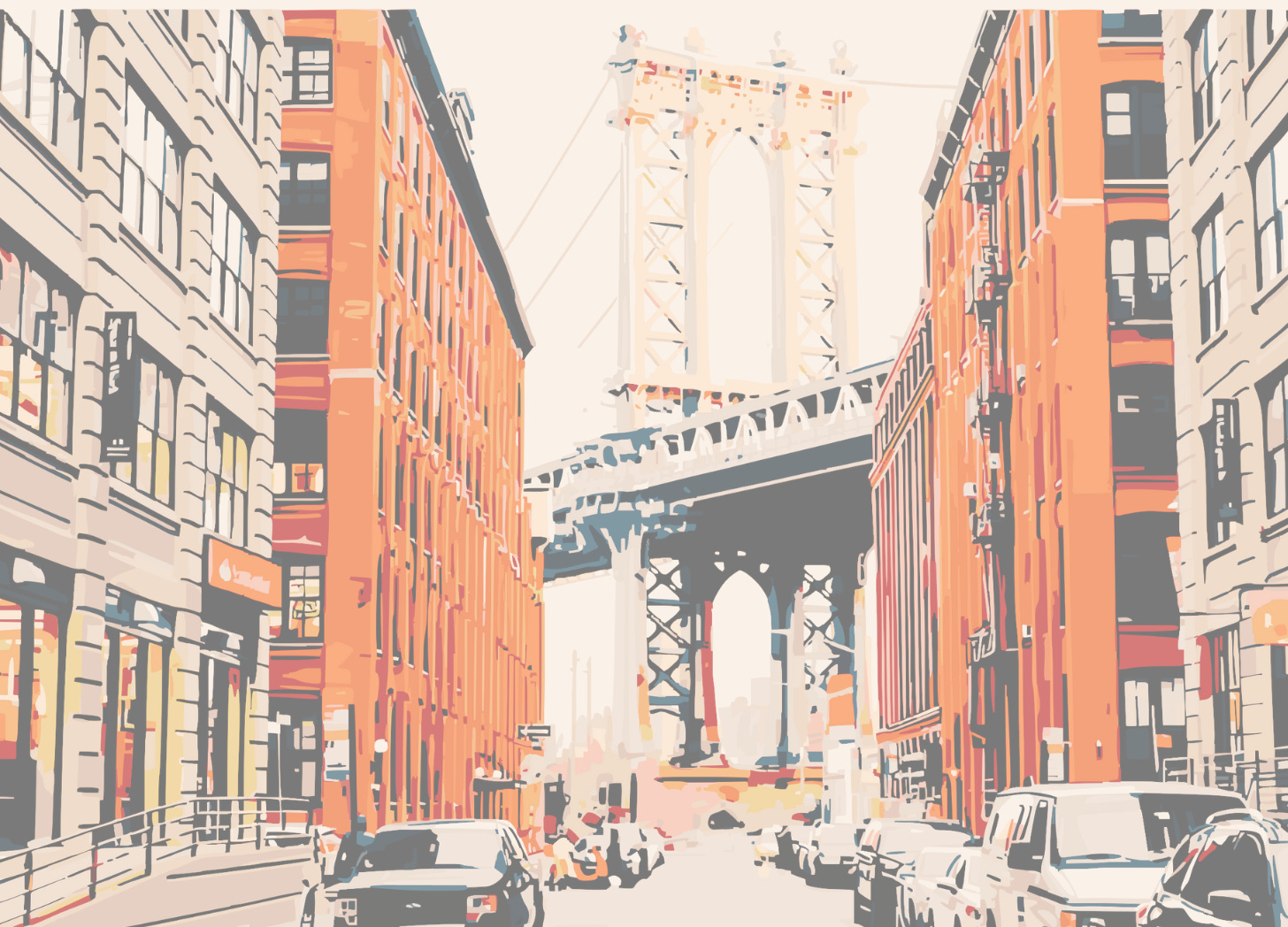
If you prefer to listen to this piece- click below.
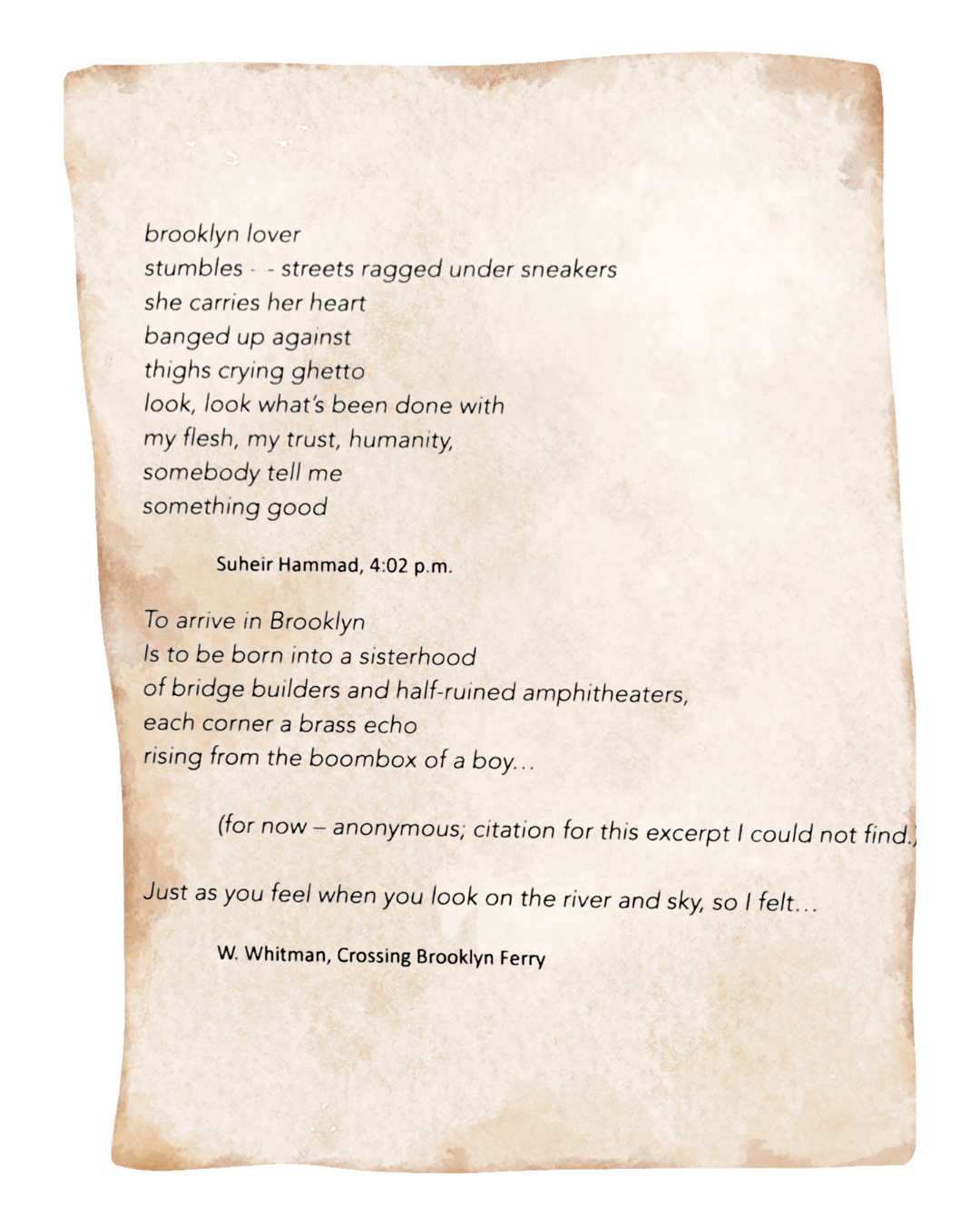
…A borough shuttled
between breath and demolition…
Brooklyn Antediluvian, Patrick Rosal
Williamsburg, the year 2000
It was a cold morning in a tough little part of Brooklyn, and I was heading out alone. The city was a mean cold that winter --- ice hung onto everything in thin invisible sheets. Every small thing was cold -- cab door handles, metal window frames, even the broken doorknob of the row house where I lived with my roommate Cathy.
It was early December and not a single green leaf was left blowing in the wind. All I could see was grey like cement and I ran toward the L train with most of what I owned in the world on my back.
I rarely thought of myself as poor. I loved what I did. I was a choreographer and having just finished an MFA, I’d launched a dance company and was in the blush of assembling my first New York season. My work would bring me into large, empty sunny studios for hours and hours, many solitary, and time would just disappear. I knew a life in the arts would be humble --- not even people at the very top in modern dance were making any real money. But it was a purity I secretly respected.
I loved the life of an artist too. While the world raged and everyone seemed to be striving and suffering against it, there was a calm almost sacred distance to a life in the arts that I deeply appreciated. I liked being a listener and then speaking something back. As I child I was a dreamer and more often than not, lost in my thoughts.
Although I relished my work, something uneasy was stirring in me as those mornings got colder and my train turned in the screeching dark under the East River. A worrying feeling had taken root in my gut. Yes, part of it was the cold; I’ve always hated the cold. But it might be more accurate to say that what concerned me most was not the cold outside but inside ----- the heat didn’t work reliably in my apartment. And that was contributing to a sense of being too far out, too far from some shore.
Cathy and I were alternately calling our landlord, Robert, begging him to fix it. I used to have to take the phone out of her hand when it was her turn to call because she had this modest, British way of apologizing for it ---- If you wouldn’t mind… If it’s possible? Could you check? It’s gone off-track again -- which ramblings incensed me. Not at her, of course, but at him.
Cath had arrived in the States from England on a Fulbright to study choreography. She’d finished school a year before me and was now overstaying her visa to make work in New York. But she was way out of her depth dealing with a slum lord. She grew up on the Isle of White. I was a loudmouth from New Jersey.
I used to have to grab the receiver from her (which was attached to the wall!) and scream, “Robert! Get over here! It’s freezing! I can see my breath! Get over here and fix it or I’m calling the police!”
The calls to Robert though usually only brought us a week or so of banging, leaking wet heat. We were practically squatting. Except that we were paying! When my sister, Lis, came to visit me there, she cried when she stepped foot in the place. That was a red flag day.
Our third floor flat was in East Williamsburg on Grand Street where it dead ends at the elevated Brooklyn Queens Expressway — part of a cluster of old tenements built in the frenzy of newcomers to New York’s shores almost a hundred years before. But the neighborhood never ascended or prospered and its buildings stood, cracked and tired, as evidence.
Our place was cartoonishly dumpy —- screaming apart. You would go to wash a dish, and the faucet would pull off the sink. When it rained, even lightly, the ceiling tiles in my bedroom would collapse onto my bed because of a leak in the roof that Robert could not seem to fix. He did try. Our building was waving good-bye as it collapsed into the Brooklyn water table --- while we slept, while we worked.
Once when I’d really had it, I called the housing authority and there was a rigmarole I had to go through — paperwork I had to fill out and then they gave me a date where I had to sit home all day waiting for the inspection, a bizarre errand because I usually only slept there.
Occasionally, Cathy and I would cross by chance in the evening, grabbing take-out and drinking cheap wine or bourbon that we’d bought down the street from the man behind the bulletproof glass. We’d discuss our dances and their glitches and try to solve one another’s choreography. I have happy memories of those nights —- some of the happiest from that time.
It was then that Brooklyn felt to me like an enormous proscenium — every beating heart out there knit into the story it was trying to tell that day. As dark came on the borough, Cath and I would be lit, by moon and fluorescence in equal measure, we too in it, of it, our silhouettes turning on the cracked linoleum in the tiny kitchen as snippets of Spanish and quarrels, backfiring trucks and music, floated up from the street or came through our paper thin walls.
Other than those nights, though, I considered my real home to be the regular places I met people for coffee or dinner in town. And the studios where I worked — with sprung floors and nice bathrooms and showers for my dancers. This was one of the ways I justified living in such a place.
On the appointed day I sat there for hours, Cathy joining me after class. The two of us waiting together, eager to see if we could borrow the power to get Robert back.
Finally, these two guys arrived – tall and slender in their blue jumpers, both Black. They were a reassuring presence, warm and kind to us right off, and immediately confirmed that there were dozens of violations. Some on the outside too, the taller one said. We’ll have to get a city engineer to come out for that.
I remember this part like it was yesterday though: the taller fellow tucks his clipboard under his elbow and steps into my room where Cathy and I sat perfectly still on my fluffy white comforter, framed by the doorway and cracked plaster, he settles his stance, taking up more weight on his feet, and like a gentle giant, his eyes smiling, looks right at us and says: Where you ladies from?
The question hung in the air for a bit and then, almost like magic, landed somewhere inside of me and started to tick away like a clock. I’m pretty sure he wasn’t after our hometown tales. He wanted a ‘why’. I believe the real question he was asking was --- how did you two end up here, in this place not suitable for human habitation? —- probably in mind of uncovering a newcomer’s error, like having just arrived in town from rural Alabama with three hundred dollars cash and a subway map.
His query stung – more for me I think than it did for Cathy. I was older than she, my early thirties. I went to NYU. I was not a beginner —- at New York or urban life or being an artist. But I didn’t have an answer for this nice man.
I’d sat there waiting all day for these guys to set things right but my plan went seriously awry. What happened instead was that the housing authority ---- New York City itself -- was explaining back to me that yes, my fully adult life, was in a state of utter collapse. Suddenly, in a single afternoon I’d lost the thread on my own meta-narrative. And with it, my grip on the future.
I’d thought it all made sense --- the amazing dancers, the New York season coming up, the reviews I would get and then the grant money would follow. But his little question made me realize that my ‘plan’ assumed a bunch of things --- first, that this long string of things would actually happen. And now I could see a sort of gap between the wish for it and the chances of it actually materializing.
Then, and much more importantly I think, it assumed that my strategy would bring me into some kind of promised land --- a land of meaning, of purpose, of peace really. And here’s the thing: I had thought my life as an artist was distant from all that striving and suffering. And it was initially, for sure, safe from that I think --- poised, calm, speaking something back.
But now I realized that I too was striving and suffering. I’d somehow unwittingly adopted a kind of careerism without realizing it. And I knew it would pollute my work. And my heart.
That was another red flag day.
--------------------------------------------------------------------------------------
And so it was —- a time of stirring and flags —- on that freezing cold morning, as I headed into the stinging cold wind, running late, running toward the L.
I was picking up the pace toward the train that would take me to work and thinking how happy I’d be to arrive at my desk and the predictable warmth of the office where I worked. The job awaiting me was not usually a comfort. It was a part-time gig doing business writing for one of the department heads at the Fashion Institute of Technology. But in this season, it took on a mantle of comfort. And heat.
Blown-bleak Brooklyn as my backdrop, I was hurrying through the stiffening cold, past the little bodegas and tiny storefronts with candies inside and flowers outside and the slightly tattered awnings of my mostly Hasidic-Hispanic neighborhood, jumping over half-frozen litter with my backpack. I was undoubtedly in jeans and beaten-up black leather boots and an un-sensible jacket. I couldn’t afford a real coat back then.
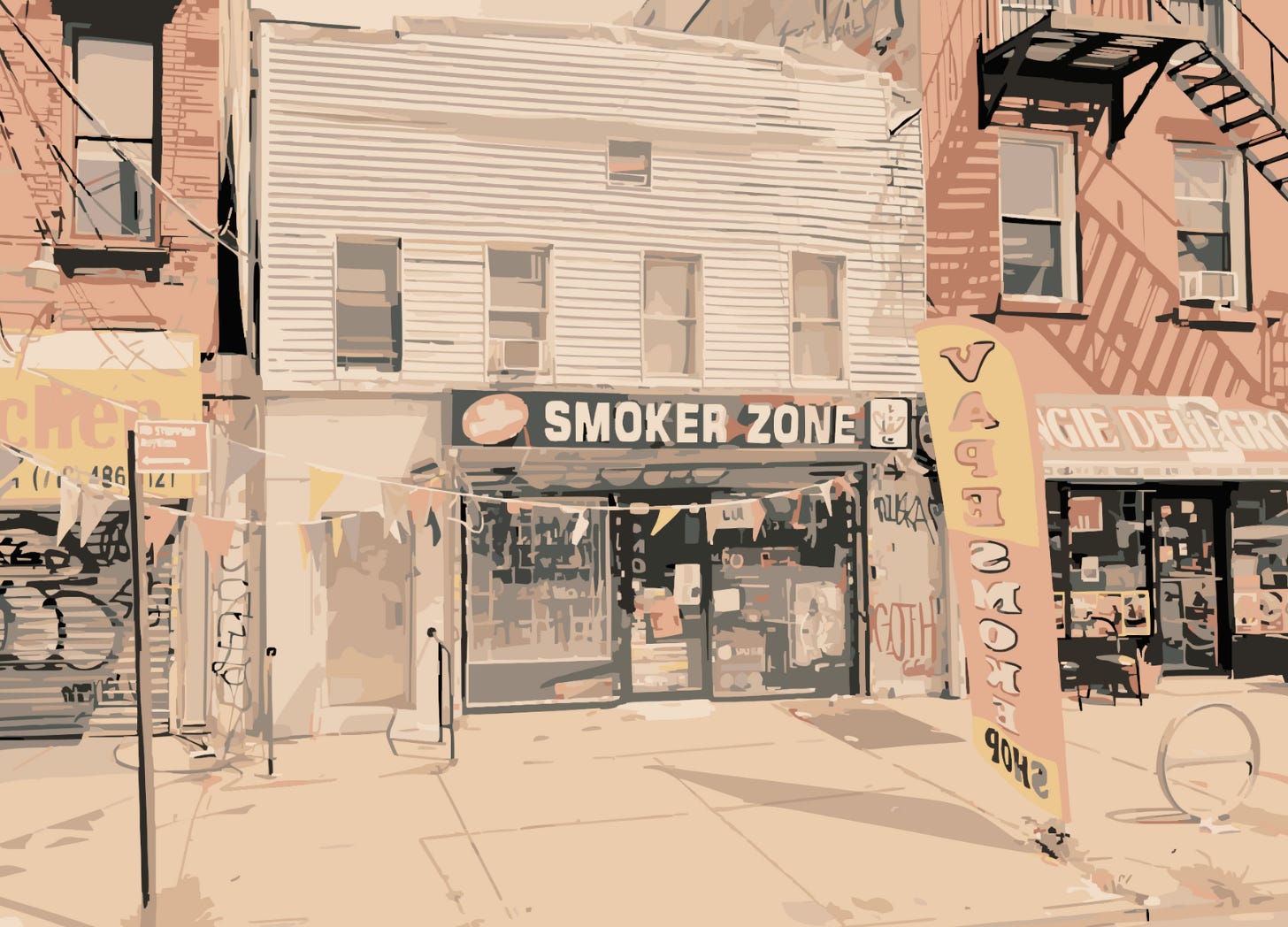
As I approached the corner of Metropolitan and Lorimer, I slipped past a clutch of chatty teenagers onto an open space where I could really move as I rushed through the crowded landing to get the Manhattan-bound train I could hear approaching the station. Go!, I shouted to myself as I crested the top of the stairs.
The next second, Holy Lord of Heaven and Brooklyn, I will never forget that weightless, split-second I was nearly airborne before the fall began. I’d slipped at the very top of the stairs on the thinnest layer of ice and was swept into slow-motion suspension for what seemed a mini-eternity.
I guess there are some moments in life when you’re in absolute free fall and your single job then is just to wait for the hit.
It came: a shearing of human joints and bones against a congregation of freezing cold corners of metal and cement. I went headlong, careening down the staircase like a frozen black package.
It’s the metal I remember most though. To this day when I eye that strip of metal that runs horizontally across the subway stairs, it still sends a miniature thrill through my body. I have to half-salute that bastard metal, remembering viscerally this day, this thing, this horribly hard metal thing I landed on -------- no hands free in time to break the fall, coming down onto that single square inch of my body, the patella, that one inch taking the mammoth, unmitigated blow.
It’s way too passive to say I fell down those stairs. It was more like I flew and crash-landed down the stairs -- like a human catapult. It was an obscene, firebrand blow to that knee.
When I had an emergency C-section years later with my firstborn son, in the aftermath of it I thought to myself — Well, I guess that went pretty hard left. But at least it wasn’t as bad as my knee.
By the time I found myself in a heap at the bottom of the stairs, a small crowd had gathered --- onlookers, well-meaners, some just curious (is she drunk? Is she dead?) --- I believe I had begun to go into shock. I started sweating and trembling and had trouble talking. I think my lips were moving but no sound came out.
I was aware of two things primarily – first, that my mind seemed ok – that I must not have hit my head because my thoughts were proceeding in a way that made sense to me, considering the situation – Oh my God, Oh my God. My leg. Oh my God. My knee. Like that.
The second thing was that I was also just aware of pain --- physical pain like I had never felt in my life --- blinding, blunting, delirious pain.
Someone called out something about an ambulance. I was mute. Someone shouted, “Get her some water!” All the while I was conscious and trying to communicate but words wouldn’t come. A lady ran to tell the attendant and shouted at her through the plexi. I looked on --- still, impassive, now chilled.
When I tried to hoist myself up, shaking my head No (to the ambulance), I realized my right leg was off-line. Communication from my brain to my leg had shut down. I sat there in a pile, my mind racing: how was I gonna get out of here? how was I gonna get home?...
Thirsty, cold and panicked, I heard from the muffled commotion above me, a familiar voice:
Kara?
I looked up --- scanning the crowd.
Then again, I heard it, Kara?
There, from among the faces of strangers, a sea of humanity, stood Doug Parry, an old acquaintance of mine from many years before, my Seattle days. I hadn’t seen him in at least six or seven years. I blinked to check my eyes (am I hallucinating?).
He was still there. It had been a lifetime since I’d seen him. On another coast. 2200 miles away.
Kara, are you ok?
Doug? Doug! (I can talk, I thought.. I can talk!)
Oh my God, Doug, help me up. I fell. Down the stairs. Can you help me get up? I can’t feel my leg. This leg. It’s not moving. I can’t feel it.
Doug was a painter. He was all about painting. And back in my Seattle days, it may have been customary for him to have a rocks glass nearby too. We’d worked together in restaurants – I a waitress and Doug a bartender. He and his friends were socially central somehow. I’d admired them.
Doug was a big guy -- six foot two or three and broad-shouldered. He had a strong jaw, pale blue eyes and light brown tousled hair. He was handsome. He’d played football at the University of Washington. If you’d told me back in my twenties that one day Doug Parry would come upon me injured and in distress and single-handedly lift me up and carry me home, I would have been delighted, I think.
And that’s exactly what happened. He just reached down and scooped me up off the cold, dirty floor and cradled me, like a baby, the onlookers almost disbelieving (they erupted into applause) and he carried me home --- first, up into the sunlight as we stepped out of the dungeon of the subway and then the three and half long blocks home ---- under the tattered awnings, back through the half-frozen garbage and past the bodegas selling candy and flowers.
We tried to start a few conversations in the cold along the way– yes, he was still painting --- he was finishing an MFA at Pratt. He had a show coming up, his final thesis. And yes, I was still dancing, choreographing now actually. Had a season coming up next Fall. I’ll send you a flyer, I said. But it was so cold, and it was hard to for him to talk and carry me and my backpack at the same time. So mostly we were quiet as we walked.
When we arrived, he somehow managed to get my key from me and put it in the broken doorknob while holding me steady and step by step, carried me up the three flights of crumbling row house stairs and into my flat.
But on that morning my apartment felt suddenly and briefly beautiful to me. I looked out the kitchen window to the east at the sunlit water towers of Brooklyn and all the way to the river. Safe, bright, home.
When Doug set me in my kitchen chair, one leg bent and relaxed and the other stiff, straight, alien – I’d offered him coffee, water, did he want to stay for a second and I could order breakfast from a diner, (what diner? I lived in a slum...) But he was running a little late, he said, and smiled and had to run if that was cool. You ok?, he asked.
Yes, yes, yes, I’m good, Oh my God, Doug, I’m good. I said. Thank you so, so much I kept saying. Thank you.
I never saw Doug Parry again. When his show came up five or six weeks later, I still wasn’t walking on that leg. Eventually I got my insurance to heel, and some doctor diagnosed the problem. It appeared the impact to my patella was so severe that the muscles on either side of it had simply shut down to protect the area. I was truly (but only temporarily) paralyzed in that leg.
About a month after the fall they started electrical stim to those muscles and I began to regain feeling. Physical therapy followed and, in the meantime, I used a cane to walk. After another few months, I was back in the studio, slowly returning to work. But it would be many months before I returned to class. The whole ordeal gave me a ton of time to think.
As Doug left, I heard the broken front door echo half-shut up the stairwell and I sat in the quiet kitchen by myself for a very long time. The heat had kicked on. Thank you, God. I sat listening to the loud buzz of the fridge and looked out the kitchen window again at the towers that one day I’d counted but no longer remembered the total.
A flood of gratitude came over me then. For the sun. For my apartment. For my life. And for Brooklyn -- all its perennially unfinished business. Inchoate Brooklyn – tired, restless, beautiful Brooklyn. A place with someplace else to go. A place with something on the tip of its tongue --- aiming, hoping and only half-having. All the neighborhoods loosely arranged by different kinds of wanting, that ran underneath them all like that water table.
I wasn’t thinking so much as I sat there but just seeing things, regarding them, just as they were. And I had a new and strange gladness for everything; it was gentle but unassailable. I watched as the light moved slowly across the broken lines of roofs and felt my body. Breathing.
Soon, this shelter of quiet evaporated and I began to hear a louder, more concrete dialogue with myself take shape: I’m disabled, I thought. I can’t walk. I can’t dance. How am I even gonna get down those stairs? How will I work? What about my season? I needed to talk to someone.
My sister Jenny lived in Hong Kong; it was evening there. She’ll be home, I thought.
Jen? I said, when she answered the phone. And then I started to cry.
That day was another red flag.
I had a place I put the red flags. I put them in with my bath salts. And after I talked to Jenny that’s what I did. I hopped down the hall on my good leg and started running a very hot bath. My go-to thing back then. Still is in many ways.
I used to run the bath, light a candle and turn off the lights so I couldn’t really see the bathroom which was exceptionally decrepit. And I’d bring my boom box in there too -- that tiny, windowless space -- and play Mozart’s Mass in C Minor, good and loud so it blasted through my neurology. I’d always wanted to choreograph to it but was too scared to try.
The water and salts would steam and the scent of rose or citrus would fill the room or eucalyptus if I was sore from class or rehearsal.
I didn’t understand the German words firing through the speakers, nor did I understand then or believe exactly whatever was being said, about God or man or Christ or anything else. But I knew the mass sounded like a real emergency and somehow, I began to sense it running alongside my own emergency. And catching up.
In that long, cold winter that followed as I hobbled around the freezing city with my cane, I was finally able to admit to myself that I needed something desperately I could not get or buy or make.
And I started to summon the guts to admit that deep inside this crazy striving had darkened my door —- I was desperate to achieve, to succeed really. That was the thing. I had to succeed. And if that were the case, wasn’t it in the end just like chasing anything else ---- money or fame or love or attention or any other kind of validation? I wanted to be an artist but wasn’t my heart divided —- in some way covertly turned toward something else?
What do I do, I thought. Start over? Go back to school? Move to Africa? Adopt a baby? I didn’t know. But I knew I didn’t know. And that’s when it started --- my leg slowly began to wake up and my life began to turn.
When I lay in the salty bubbles over the ensuing months in Brooklyn, something strong seemed to slip under my feet while I listened to that mass. The effect was a sense that I was standing and reclining at the very same time.
I can still vividly remember the smell of that dank room, the damp walls with the wallpaper peeling away, the whole rack and ruin row house. And the feeling I had that somehow the rose and citrus were rising up and winning out against the filth and rot.
—————————————————————————————————————————————
Truth, Tip, Tote
Truth: Mozart’s Mass in C Minor, Kyrie.
Tip: Brooklyn Poetry. With AI it’s so easy to find poetry about specific people, places and things. Here are some extraordinary excerpts:
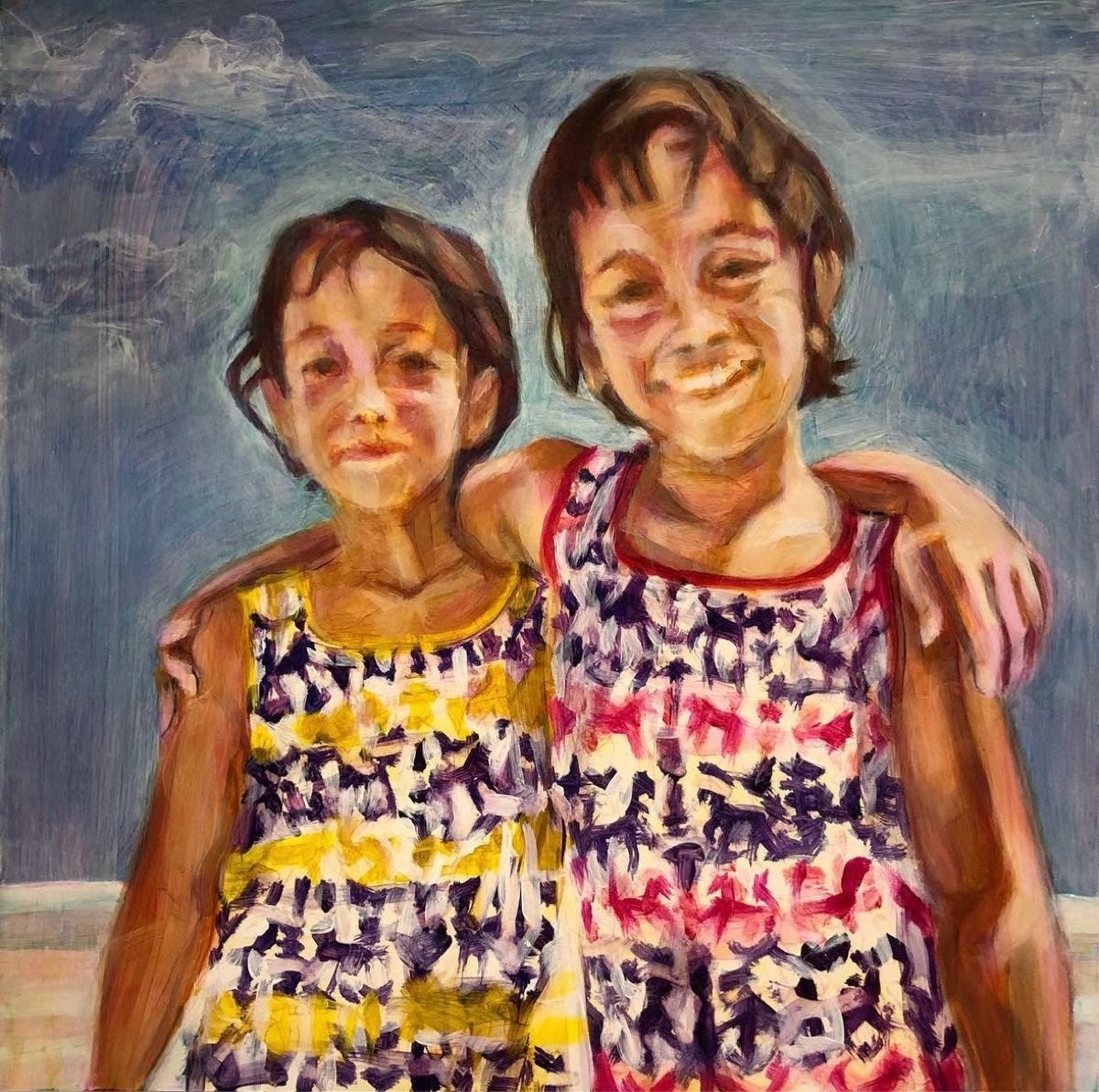
Tote: Doug Parry. It appears he’s still painting. Thank you, Doug! For carrying me home. Attempts to ping him before the the posting of this piece fell short. But I found so many gems in his instagram reel. Including this beauty.
This letter is for Cath and Brooklyn. Still love you both. And for all the dancers who live there. We are, in fact, knit into a great story.
Aw geez, didn’t know I needed this. Thanks for the fortifying shot of..whatever I’m feeling right now 🙂
Another amazing piece Kara. I marvel at your capacity to look straight on at the grittiness and transcend it, not through abandonment but through love. And a hot bath!